Military chaplains tend to be some of the most educated people in a command. Every chaplain is required to complete an accredited bachelor’s degree and an accredited Master of Divinity (MDiv) or equivalent graduate theological degree recognized by their faith tradition. In most cases, that means at least 72 credit hours of graduate education.
That’s years of preparation before ever stepping into ministry. And if I’m being honest, not every class in seminary translates directly into military chaplaincy.
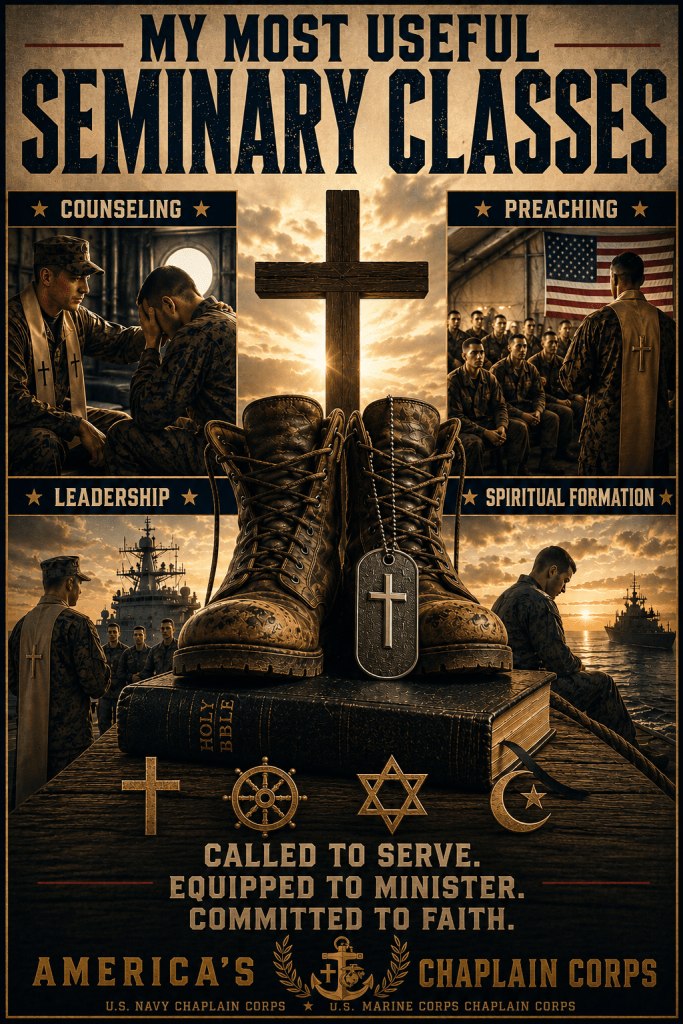
That isn’t a criticism of seminary education. Seminary gives you the theological foundation to minister well. But once you enter military life, some classes suddenly become tools you use every day…and others become a little more theoretical. Of course, every chaplain’s experience will be different depending on personality, faith tradition, and ministry style. But looking back, these are the three categories of classes that prepared me most for ministry in uniform:
1. Counseling Courses: Military chaplains spend a ton of time providing pastoral care and counseling.
To be clear, we’re not mental health professionals, and part of being a good chaplain is knowing when to refer to the experts. But ministry presence, active listening, crisis care, coaching, spiritual guidance, and helping people process life’s hard moments are daily realities in chaplaincy.
If your seminary offers electives in counseling, pastoral care, coaching, grief, family systems, or interpersonal communication, I’d seriously recommend taking them. Those classes continue to pay dividends years later.
2. Leadership, Management, and Administration Courses: This one bothers me because admin is NOT my strength! 😊
Church administration and military administration are obviously not the same thing, but learning how organizations function matters more than I expected. Military chaplains serve as staff officers. We supervise programs, manage volunteers, coordinate events, advise commanders, steward resources, and lead Religious Ministry Teams.
Courses that teach leadership, organizational behavior, administration, project management, or even basic management principles can make the transition into military ministry much smoother. Good ministry still needs good systems.
3. Preaching Labs and Communication Courses: Preaching Labs was the name my seminary used for courses focused entirely on writing and delivering sermons.
Even if your faith tradition approaches preaching differently, military chaplaincy involves a LOT of public communication.
You may preach. You may teach. You may facilitate discussions, brief commanders, lead trainings, or speak at ceremonies, memorials, graduations, and retreats. Learning how to communicate clearly, confidently, and authentically is one of the best investments you can make. Your ability to connect often matters as much as your content. (BE A GOOD DUDE AND DON’T BE WEIRD)
These are the three areas that stand out most to me in preparing me for ministry in the military. For those of you who have served in military chaplaincy, what classes ended up being most useful for you?
And for those considering chaplaincy: what questions do you have?
We’ve absolutely loved ministry in the military and enjoy talking about this blend of service, faith, leadership, and caring for people. Drop a comment or send us a message.
If you want to learn more about military chaplaincy, check out our book, Military Ministry: Chaplains in the Twenty-First Century.