If you picture military chapel services happening in beautiful sanctuaries with stained glass windows, polished pews, and soft organ music in the background…well, sometimes that happens. I have preached in chapels like that.
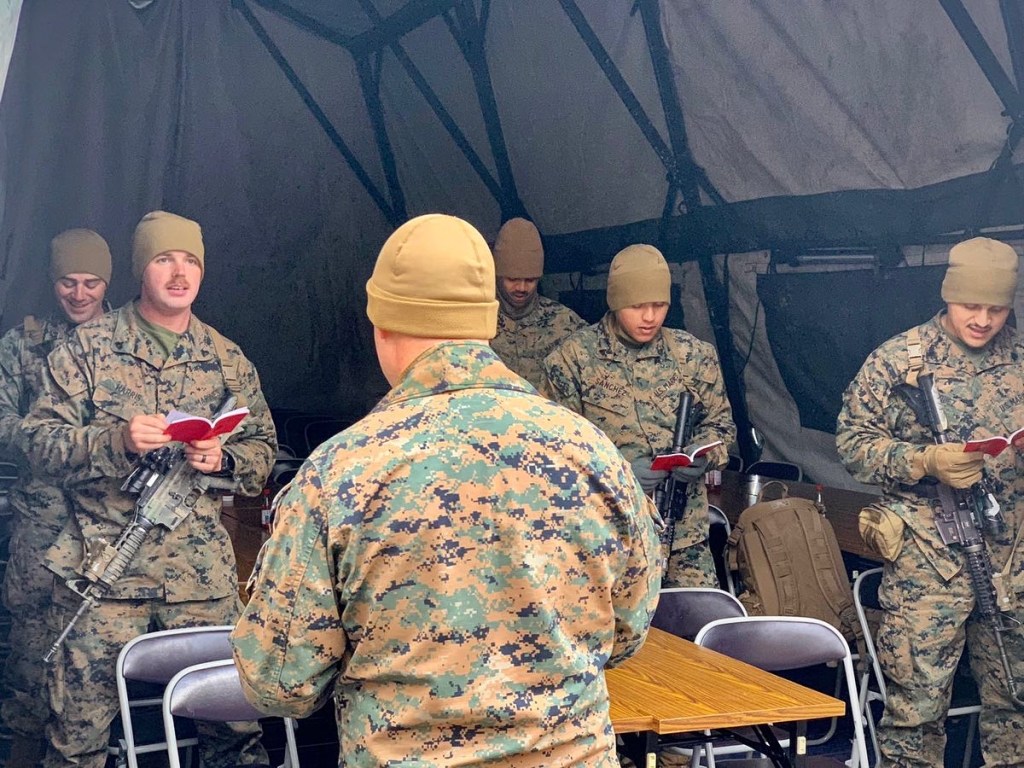
Other times, church happens in a freezing tent in northern Japan while most everyone keeps their gloves on because it’s too cold to function properly. One guy tried to tough it out to turn the pages in the field worship guide, but GOODNESS it got cold. Because we were at a remote camp, there was no chapel facility, the food service tent became a target of opportunity after morning chow, so we turned it into our church.
I’ve held services for troops in the Persian Gulf aboard a rolling warship, in barracks near the Arctic Circle, in dusty field environments, and inside temporary tents during military operations. One of the more creative “chapels” even featured an altar built entirely out of MRE boxes by my Religious Programs Specialist. Honestly, it looked exactly like something Marines would build for church in the field.
And somehow, every one of those places became sacred space.
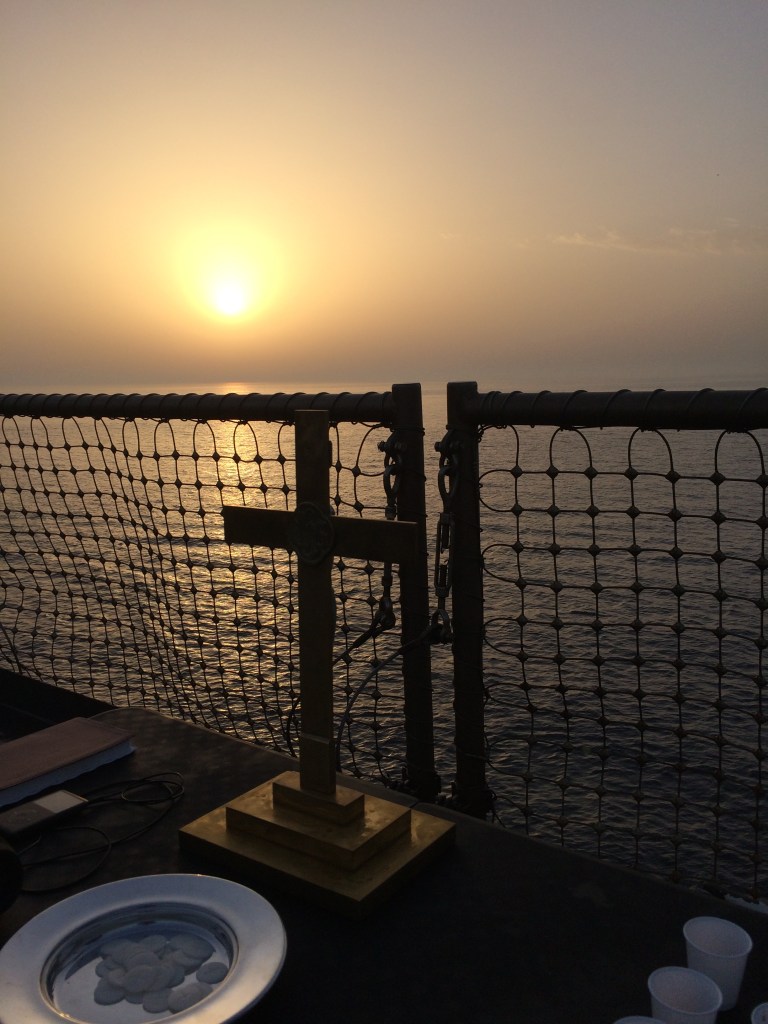
One of the most meaningful services I ever participated in happened aboard ship in the Persian Gulf on Easter morning at sunrise. The ship gently rolled beneath us as Sailors and Marines stood in their coveralls and uniforms preparing for another day of operations. Somewhere nearby, ship noise interrupted parts of the service because military operations don’t exactly pause for chapel. In fact, oftentimes we have to move Divine Service around to accommodate the operational schedule of the command!
There was something surreal about celebrating one of the holiest days of the year in the same region where the events behind it actually took place. I remember looking around thinking: This may not look like church back home, but this is SO COOL to celebrate Easter in the area of the world where, 2000 years earlier, Easter took place for the first time.
That’s one of the things prospective chaplains need to understand early: ministry in the military is portable.
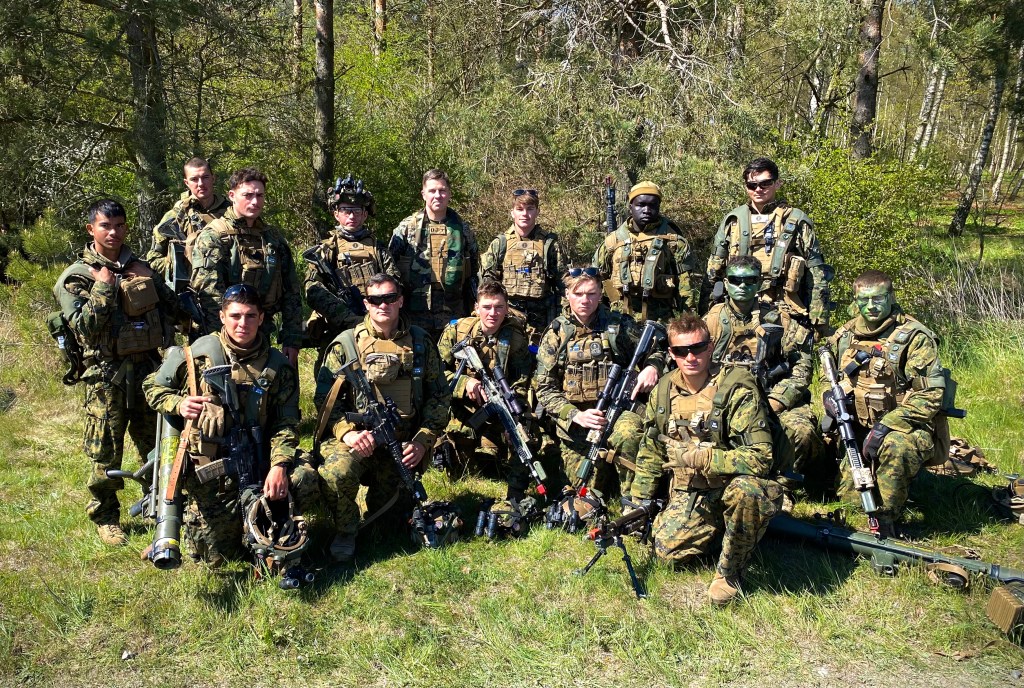
My Religious Program Specialist (Navy chaplain assistant) and I go wherever the troops are and find a pause to conduct services. That means the infantry shows up to church with machine guns and bazookas.
Church is not ultimately about the building.
It’s about people searching for hope, meaning, stability, and connection to something bigger than themselves, especially in difficult environments.
What question do you have about military chaplains? We have absolutely loved ministry in the military and love talking about this stuff! Comment below or shoot us a message with your questions.
If you want to know more about military chaplaincy, check out our newest book, “Military Ministry: Chaplains in the Twenty-First Century“