
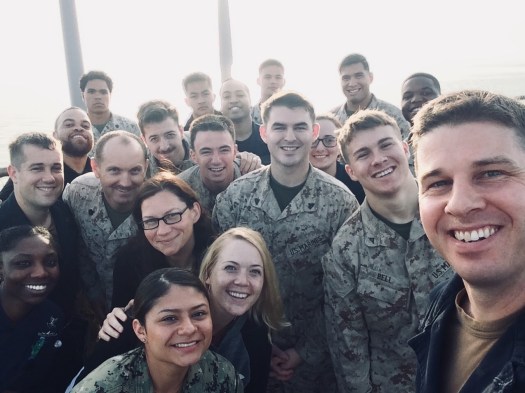
A friend and mentor of mine once taught me that there are three phases of chaplaincy. First, you can be “A Chaplain.” The command doesn’t know you yet, you’re just the person who is filling the billet. When there’s a command event and they need a chaplain, it can be anyone, there’s nothing special about the individual. Second, you can be “The Chaplain.” Service Members in the command recognize that you are embedded in the command and belong to the unit. You’re distinguished from any ol’ chaplain because you’re the one. Third, and finally, you can be “My Chaplain.” This is when Service Members stop seeing you as the one filling the role and take ownership (in a good way) because you aren’t just anyone – you are THEIR someone.
The big question, then, is how you move from one phase to another. We all arrive in a new command as A Chaplain. The goal is to become someone our people call “My Chaplain.” Whether you’re aboard ship, in an infantry battalion, at a schoolhouse, or on a small overseas installation, people are more likely to reach out when they already know how you listen and trust how you’ll handle what they tell you. This takes intentional time and effort, so here’s my take on how you can get to that glorious phase where they claim you as theirs.
All of these practices start early and should continue through your whole tour, but the following timeline can give you a focus for each month.
Days 1–30 – Learn the command and see where people work
Walk the command with your RP (or whatever your branch of service calls the chaplain’s assistant). Eat where Service Members eat. Visit workspaces, training areas, and duty sections. Go back to the same places often enough to learn names and follow up on what people told you. My favorite opening question is, “Where are you from, where’s home?” Then I try to connect my life to that place. It’s about being intentional to build bridges. Start to remember people’s names and stories.
When you’re talking to the Commanding Officer and leadership, ask, “When does this command put the most strain on people?” and “Who tends to fall through the cracks?” At a schoolhouse, that might be a student’s first week away from home. In an operational unit, it might be the workups before deployment. You can build your schedule around what you hear.
Then check what people already depend on. Learn the worship schedule, religious accommodation needs, referral contacts, and after-hours coverage. Meet the lay leaders and neighboring chaplains. Verify that someone can actually get to the service you’re referring them to. Make sure to learn the command on ITS OWN terms. What worked in ministry earlier in your life may not necessarily work at your new command.
And finally, go suffer with your command. PT, field ops, and everything else that troops complain about are perfect opportunities for you to be alongside them going through the exact same thing. THIS builds camaraderie and connection. THIS will bond you to your command.
Days 31–60 · Make yourself easy to find and useful to the command
Give your RP a real role to play in the game plan. Build the weekly schedule together. Give them ownership of a defined piece of the work, such as coordinating service logistics or mapping coverage for an exercise. Ask what they’re noticing on the deckplates. They may see gaps you’ll miss from a staff meeting. I recently asked the RP2 (Religious Program Specialist Second Class) what he saw with fresh eyes since he’s only been in the command for two weeks. What are we doing well? What can be improved? Don’t be afraid of asking your enlisted support for their opinion; it will make your ministry stronger.
Next, regularly explain how people can use the chaplain. Make this explanation early in your relationship with the Service Member. I like to do it when Marines and Sailors bring me their check-in sheet when they arrive at the command. You can tell people where to find you, how confidentiality works, and that they can come by before a problem gets big. Show the same interest in the ones who never come to chapel as you do in the one who’s there every Sunday.
Days 61–90 · Turn what you’ve heard into action
Give the commander a clear read on patterns and issues. Your boss should never be surprised by your information at the weekly/monthly Commander’s Update Brief (CUB). A good chaplain keeps their CO up to speed through the week. Every CO I’ve had has had an open-door policy. USE IT! I will drop by the boss’s office and say, “Sir, do you have a minute?” Say what you’re hearing across the command, where it’s showing up, and what the command can do about it. MAINTAIN CONFIDENTIALITY, but you can talk about generalities. In a small command, even a trend can identify someone through context, so be careful. You can share broad patterns while protecting identities and details that could reveal who spoke with you. For example, “Marines have mentioned feeling disconnected after the duty day is over. Here’s one way we could help new arrivals get connected in their first week.”
Be present enough to become familiar, authentic enough that people can talk to you without putting on a front, and respectful enough that they’ll trust you with a story or a belief different from yours. Or, as I like to put it, DON’T BE WEIRD. Be approachable. Take an interest in people. Let an ordinary conversation be an ordinary conversation. Learn names, keep your word, and come back next week.
Becoming “My Chaplain” happens at different speeds, but these practices can help build the familiarity and trust that allow people to claim you as theirs.
Have a question? Drop a comment or send us an email. We love talking with people about military chaplaincy. It’s an incredible ministry. And check out our latest book, Military Ministry: Chaplains in the Twenty-First Century.



Well said, Chaps!
LikeLiked by 1 person