Very recently, someone reached out to us and had a list of questions as they consider a call to Navy chaplaincy. After answering their questions, I asked if they minded if I posted the questions and answers, as many others might have similar (or the same) questions. They gave permission, so below is that conversation. ~ Chris
1. I know that if there are multiple chaplains at the same base, they typically rotate services. How does this rotation effect ministry and how I minister when it’s my turn?
This is an excellent question. For Navy chaplains, there are so many different types of billets (assignments) we can have, ministry can take on many different sizes and shapes. The largest categories of assignment fall under 1) Sea Duty and 2) Shore Duty.
Sea Duty assignments are operational in nature and have the possibility of deploying (even if the unit doesn’t actually have a deployment in the schedule, it is the TYPE of unit that can deploy. When assigned to an operational command, Chaplains conduct “Divine Services” (worship/church service) with the command. I’ve done operational tours with USS FORT MCHENRY (an amphibious ship), 2nd Battalion 8th Marines (an infantry battalion), and 2d Combat Engineer Battalion. I deployed with all three of them. While their chaplain, I did services on the ship or in the field. Operational chaplains usually do not have chapel duty unless you request to be put into a preaching rotation in the base chapel. Not all base chapels have a rotation, it depends on how the installation chaplain runs the program.
Since operational chaplains conduct services with the units, that means service in the field or underway (out to sea). When operational chaplains happen to be home on the weekend, most opt to go to church with their families wherever they have plugged in.
Shore Duty is the term for a non-deployable, non-operational command. It could be (but is not limited to) being assigned to an installation. If you’re part of the base chaplain team, you can expect to have chapel duty. That might mean you have lots of pulpit time. It might mean you preach once or twice a month. It depends on the size of the Religious Ministry Team, the number of chaplains, and how the installation chaplain runs the program.
2. Chaplains have the ministry of presence and go wherever the unit goes. I’m sure that includes PT, as well. Obviously, every unit and every PT session is different, but if you could explain the average PT session in your experience, what would that look like?
In my experience, PT is what you make of it. Much of the time, Staff Corps Officers are allowed to PT individually. In the Marine Corps, unit PT is often done at the lower level (squads or platoons). The larger unit PT (Company or Battalion level) are often done more as a special event or team building/motivational tool and are less frequent. Again, a lot of it depends on if you are on Sea Duty or Shore Duty. When I was assigned to the ship, everyone was on our own schedule for PT, there was no structured command PT.
This means that the individual’s commitment to PT is CRITICAL. You must discipline yourself to workout. If that has not been part of your life, now is the time to start.
3. What should I expect for PT in ODS?
Because Officer Development School (ODS) is entry-level training, PT IS more structured. None of it is what we call “break-off” PT – they’re not going to hurt you. It’s a school for Staff Corps Officers. While they may not mind breaking off a chaplain, they won’t do anything that will injure our medical officers, surgeons, dentists, etc. Make sure you can run, plank, and do push ups.
4. How long after starting ODS do you start getting paid?
You go to ODS on orders, which means you start getting paid right away. Military payday is the 1st and the 15th of the month, so depending on your start date, it may take a cycle for your full pay to kick in.
5. Realistically, how often do you deploy as a Naval Chaplain?
A lot of it depends on the type of command you’re with. Remember what I said about Sea Duty vs. Shore Duty? The type of command will also determine the length of the deployment. In my career, my time away looked like this:
2019 – USS FORT MCHENRY: Deployed for 7 months
2021-2022 – 2nd Battalion 8th Marines: Deployed for 6 months
2023 – 2d Combat Engineer Battalion: Deployed for 4 months
2026-2027 – Overseas unaccompanied orders to Korea for 12 months.
Additionally, there will be workups, field operations, and underways that are not “deployment” but will have you away from home for weeks or months at a time. For operational tours, plan to be gone away from family 50% of the time.
6. What are some things that I should do now to academically and physically prepare for ODS?
Academically, I suggest reading the Naval Officer’s Guide and the Bluejacket Manual. They will help with the “Sailorization” part of understanding the Navy. Physically, start running, planking, and doing push ups.
7. Realistically, how fast can I expect to be up for promotion between each level?
If you come in as a Lieutenant Junior Grade (LTJG) your paygrade will be O2. You will be there for two years before promoting to Lieutenant (LT) which is O3. That is statutory and automatic, you just put in the time. Moving to the next paygrade of O4 is different. You’ll be a Lieutenant for roughly 6 years before you’re eligible for Lieutenant Command (LCDR), but that promotion is a competitive promotion and your packet will go before a board of officers. If you get selected, you’ll promote. If not, you try again the following year(s). Once you make LCDR, you’ll have about another 5 years before you’re looking at O5, Commander (CDR).
8. Is there anything that you wish you would’ve asked your recruiter prior to joining that I should probably ask?
Nope. I KNEW I wanted to do it. There will be things you learn and discover along the way that only come with experience.
9. Is there any wisdom that you can give me as someone going in?
Focus on the people. Regardless of the administrative work chaplains have to do, we’re really here to care for people. Let that drive you. That means you need to be approachable. Chaplains like to tell new folks coming in, “DON’T BE WEIRD!” Sailors and Marines have to feel like their chaps is an approachable human being.
I appreciate the questions. If more come up, you’re always welcome to reach out and ask. I absolutely love being a chaplain and caring for Service Members. Even on my toughest days, I still love my job and wouldn’t trade it for anything.
This is the best ministry.
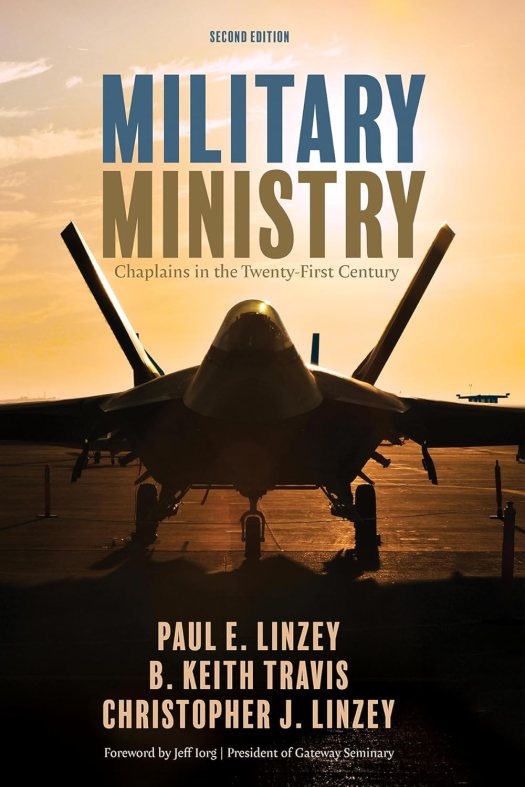
If our readers have any questions about military ministry and chaplaincy, feel free to ask questions in the comments or reach out in the “Contact Us” part of this site. You can read more about our take on chaplaincy in Military Ministry: Chaplains in the Twenty-First Century.
 Military Chaplain Guide