I had heard that Commissioned Officer Training was easier than the enlisted side’s Basic Military Training, or even the Officer Training School, because we chaplains were part of the professional corps. In fact, I heard some stories that included tales of playing golf that made COT seem like a club, complete with housekeeping and gourmet buffets. However, for this thirty-six-year-old who had been in full-time ministry for nineteen years, this was a huge hardship, and I learned quickly that those narratives were considerably false.
I remember waking up on the fifth day thinking to myself, “What have I done? I definitely did not hear from God!”
The previous night, I almost cried myself to sleep from the stress of not eating normal food (only MREs), not sleeping enough, the high-pressured, extreme environment, missing my wife and four children, feeling total isolation, and having serious caffeine withdrawals.
We had an alarm clock every morning at 0430 that consisted of about five Military Training Instructors and five officers who from a loudspeaker would say, “ Wake up, wake up, wake up, it’s 0430” while at the same time kicking on the doors and yelling at the top of their lungs at anything breathing. They gave us a total of ten minutes to put on a uniform I had no idea how to wear, while I also had to make sure my bed was made, and the room was in order.
I felt I was in hell and that I was emotionally, mentally, and physically being broken apart. My mind would continually go back to the scene in my hotel room the day before training began: drinking coffee, facetiming with my family, hearing my kids tell me they loved me, and having the freedom to do whatever I wanted. I had no idea what to expect when I arrived at COT. I actually thought there would be a full day of getting to know everyone, checking-in like one would at a hotel or conference center, with identification and paperwork needed, room assignment, and a restful night’s sleep to start a fresh day of training in the morning. My assumptions were far from reality.
I pulled up in my taxi at Maxwell Air Force Base in Montgomery, Alabama, during June’s summer heat to some of the most organized chaos I had ever seen. As I attempted to pay for my taxi, three MTIs walked over to me and calmly waited for me to finish paying and grab my bag. As soon as I was done conducting my business with the civilian driver and my bag was in hand, a switch flipped in those MTIs, and reality sank in. The entire day we were yelled at, taught how to reply when spoken to, given the rules of the land, how to stand at attention, and how to somewhat march together as a group. At no time were we allowed to speak, laugh, or even move, unless given permission.
Our first lunch was served as we all sat on the concrete, four to six feet apart from each other, and thrown an MRE. There were no instructions. All we had was a basic instinct on how to eat this food made to survive a nuclear holocaust. We had to wear Camelbacks, and were told to drink at least four or five full Camelbacks of water a day while in the one hundred and five degree Montgomery heat. I was the only person in our squadron that tried to heat up my MRE with the water from my Camelback, and I remember numerous people watching me with speculation that I was doing something wrong.
In retrospect, I should have just eaten the MRE cold since half my Camelback’s water spilled onto the concrete, wetting half my jeans, and I wasn’t able to move for fear the hovering MTI would make a huge spectacle of my mistake. So, for the next two hours, I had to practice standing at attention and marching with the group, with a tucked in shirt and jeans that looked like I peed myself. I am sure others around me thought the pressure of the first day had really gotten to me.
Nonetheless, after that first week, the training became easier. New relationships had formed as we were put into flights of sixteen individuals. We learned to “embrace the suck” and get through the training as a team. It was still hard, but we learned how to maintain military bearing; understand the need for standardization, procedures and protocols; and follow instructions.
Yes, there were several other times that I wanted to quit, like waiting in the hot sun while standing at attention for thirty minutes in front of the dining facility, soaked in my own sweat, and trying not to squint, while both the sun and sweat were stinging my eyes. And once you were in the dining facility, you had ten minutes to eat while sitting at attention and not being allowed to talk to one another.
I now know there was a purpose to the madness. The training was designed to break us down and rebuild us as leaders, enabling us to serve effectively as strong officers in the United States Air Force.
On the fifth day, I was certain that I did not hear from God and that I had made a huge mistake, but that was far from the truth. Less than a year later, at my first station, I had six suicide interventions, hundreds of counseling sessions, preached to thousands of people, shared the gospel message, and met some of the best people in the world. I realize that God called me to this position, not for me to change anything specifically, but for God to change me and to change others through me.
By Chaplain Brandon White, USAF. For more stories and helpful information on serving as a military chaplain, get hold of our book Military Ministry or browse through this website.
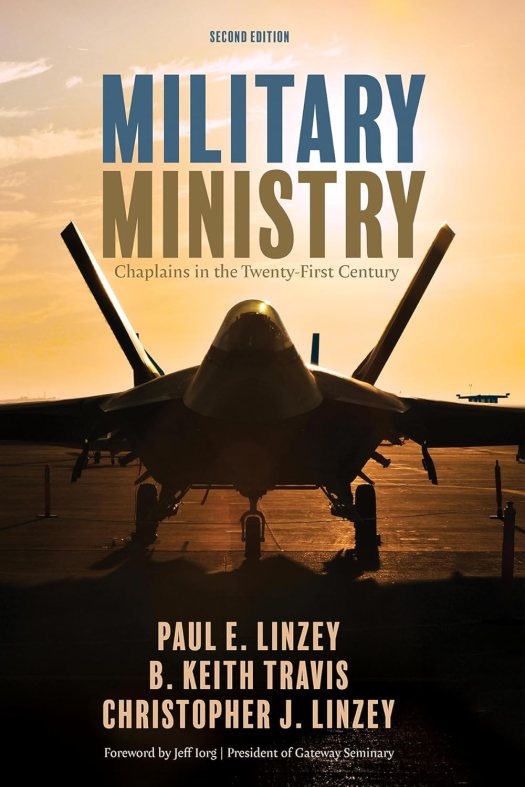
One of the most complete resources on serving in the U.S. military as a chaplain. If you are interested in learning more about what chaplains do, what it’s like being a Christian in the military, or if you have a friend or relative serving, check out this book or send us a note through the Contact page.
 Military Chaplain Guide