
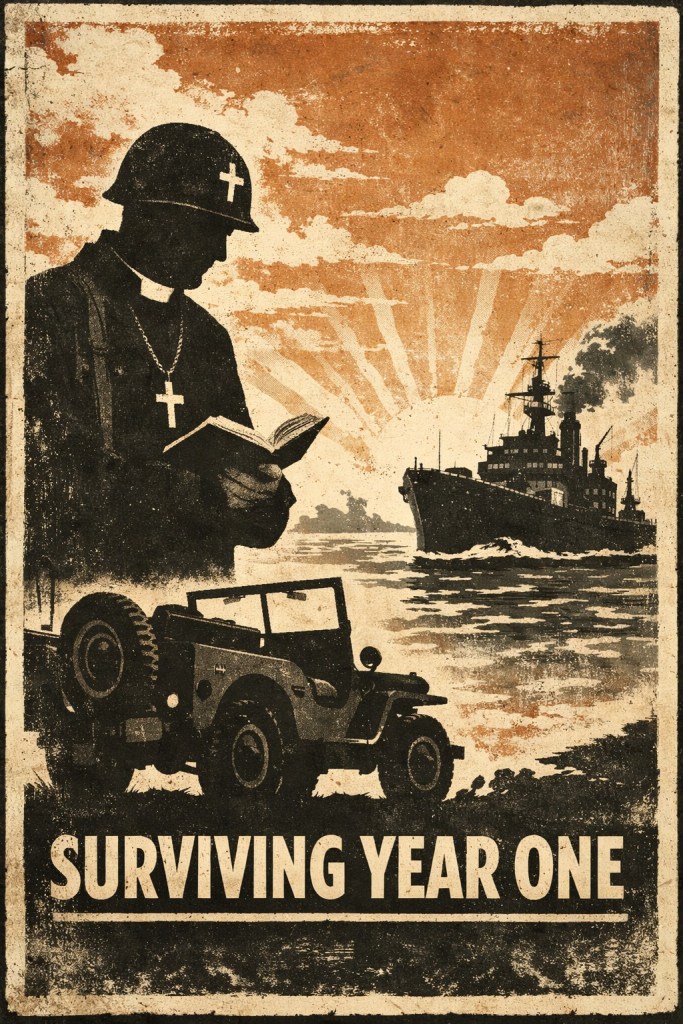
The Rookie Year Is Not a Sprint
There’s a lot of pressure of the first year as a military chaplain. You’re fresh out of the schoolhouse and are rarin’ to go. You have new uniforms, are learning a new culture, and are experiencing new expectations. There is a HUGE internal urge to prove yourself early on. At least there was for me. I wanted to be seen as a go-getter, a chaplain who was everywhere and involved in everything. The one who went above and beyond. In addition to the newbie urge to prove yourself, a lot of us quietly wrestle with a secret fear: “If I slow down, will I be seen as weak or lazy?” But here’s the reality:
The first year isn’t about going hard. It’s about learning to pace yourself so you can last
The best advice I got early on I practically ignored. I was a first-tour O3, the acting base chaplain and overseeing the chapel and Command Religious Program. I was always working. I seldom took leave, even to the detriment of my family and not being present to help do things I should have been doing at the house. One of my Navy Chiefs, a mentor and friend, sat me down and told me, “Go take care of your family. This is not the time to go hard. That time will come, but it’s not now.”
I heard his words, but didn’t internalize them. Sometimes I can be a little dense! The advice felt counterintuitive. Everything in military culture seems to reward overwork. Who is the first one in and the last to leave? This is the one who will rise through the ranks. It’s IMPORTANT work we’re doing! But my priorities were mixed up.
The first year is about stability, not intensity. You’re not the only one settling into the life and role of a military chaplain. Your family is doing the same. I tell my Sailors and Marines (now, because after 11 years of Active Duty I’ve learned a couple things) that, while family members may not serve, they certainly sacrifice because of the military. For chaplains, neglecting this critical area of our lives can end up being detrimental.
Home health fuels ministry health. I’ve seen the heartbreak and tragedy of chaplain families that fall apart because the focus is aways ministry first and family second. It was a lesson that was reiterated to me again a couple years later.
Leadership values people over optics. This is true in every area of life, and especially for the chaplain. When I was a chaplain serving with an infantry battalion, the command was preparing for deployment. One time, the commanding officer addressed all of the leaders at our regular command and staff brief.
“When the work is done, send your Marines home. Even if you see my truck in the parking lot, go home and take care of your families. The Marine Corps will get its time out of you, so now’s the time to take care of yourselves and your people.”
It was an eye-opening experience for me, and I saw a key leadership principle embedded in that very moment: Work has boundaries, and presence is not productivity. The boss didn’t say to cut corners and to skip work. He said that we work to completion, not to time. He said that taking care of people was an important part of the overall job of Service Members. Families are not distractions from the mission – they sustain it.
If an infantry commander can say this, most certainly chaplains can model it. And what we normalize early becomes culture later. Caring for people – our Marines, Sailors, and Families – is not slacking off. It’s making sure that our support structures maintain integrity.
We often live according to a mental myth that we MUST work to the point of exhaustion, to the point of burning out. But here’s the REAL truth that flies in the face of the Burnout Myth:
Giving 110% Is Not Faithfulness
A few years after my infantry experience, I had yet another conversation on this theme with my supervisory chaplain. It’s almost as though God has been banging this drum in my life but I was stubborn and too hard-headed to pay attention. My supervisory chaplain told me, “You can give 110% and be the BEST chaplain for a few years before you burn out, or you can be a really GOOD chaplain giving 85% over the course of your career. We need really good chaplains who can go the distance.”
Burnout is not sacrifice – it’s poor stewardship. It’s poor stewardship of your mental health. It’s poor stewardship of your family and support system. Longevity in ministry matters more than short-term heroics. So it’s time we as chaplains redefine success.
Faithful consistency beats unsustainable intensity
We needs chaplains who can go the distance
So what does healthy pacing actually look like in year one?
Pace your ministry. It’s okay to practice self-care; to practice family care. You won’t be expected to be a rock star your first month on the job. Take time to settle in. Learn before you lead. Observe command rhythms before changing anything. Protect your family and guard evenings and days off when possible. Communicate expectations early and often with your spouse. Like I said earlier, families don’t serve, but they absolutely sacrifice.
Build habits now that will carry you through high OPTEMPO and deployments later on down the road. Self-care is not selfish; it’s preventative maintenance. Stay healthy, present, and grounded.
Take care of yourself. Take care of your family.
The rest will come in time.
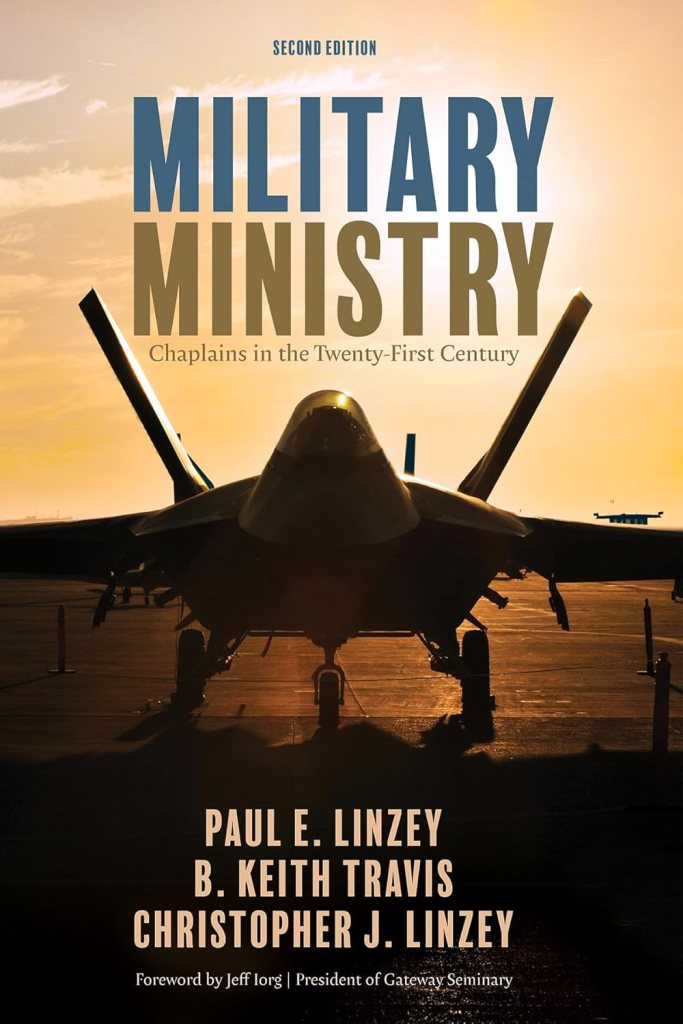
To read more about life as a military chaplain, see the newest book from Lieutenant Commander Chris Linzey, Colonel Paul Linzey (ret.), and Colonel Keith Travis (ret.) called Military Ministry: Chaplains in the Twenty-First Century.
 Military Chaplain Guide