The government offers a straightforward answer in Title 10, which directs chaplains to conduct weekly worship services and perform burial rites. While accurate, this description is notably brief. In practice, each branch of the Armed Services expands upon these responsibilities in ways that reflect its unique culture and mission.
When one considers the full scope of chaplain duties—outlined in regulations, instructions, manuals, endorsing agency requirements, and installation, base, or ship-specific expectations—the list can become extensive. Yet, despite this complexity, the essence of chaplain ministry can be distilled into a single concept: the ministry of presence.
The ministry of presence is foundational across all expressions of chaplaincy. At its core, it simply means being there. It is through consistent, authentic presence that chaplains earn the trust and permission to speak, to guide, and to care for those they serve.
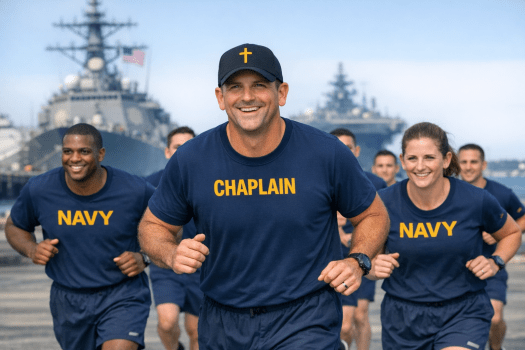
As a long-term endorser and seminary professor, I am often asked why chaplains are expected to participate in physical training (PT). Early in my Army chaplaincy, I learned that my presence at PT was not only expected—it was valued. The soldiers I served wanted me alongside them, sharing in the physical demands of their daily routine. They wanted to see me sweat, to see me engaged. Accepting that challenge became a vital part of my ministry.
The essence of chaplain ministry can be distilled into a single concept: the ministry of presence.
At my first duty assignment at Fort Bragg, the outgoing chaplain suggested that I could simply appear in PT gear, make myself visible to the commander, and then return to the chapel. That approach never sat well with me. Instead, I chose to fully participate.
In time, I discovered that I genuinely enjoyed PT—and more importantly, the soldiers appreciated my presence. They welcomed me in the motor pool, found reassurance when I joined them in the field, and valued my presence during deployments and extended training exercises. Whether at morning formation, in the field, or boarding an aircraft for a 90-day rotation, being there mattered.
What I found most meaningful was that, in turn, they showed up as well—coming to chapel and opening the door for deeper ministry. Presence built trust, and trust created opportunities to share the love of Christ—not only in the chapel, but in the everyday moments of military life.
Ultimately, the greatest lesson I learned as a chaplain was simple yet profound: be where your people are. In that presence lies the true power and purpose of chaplain ministry.
By Chaplain (COL-Ret.) Keith Travis, co-author of Military Ministry: Chaplains in the Twenty-First Century.
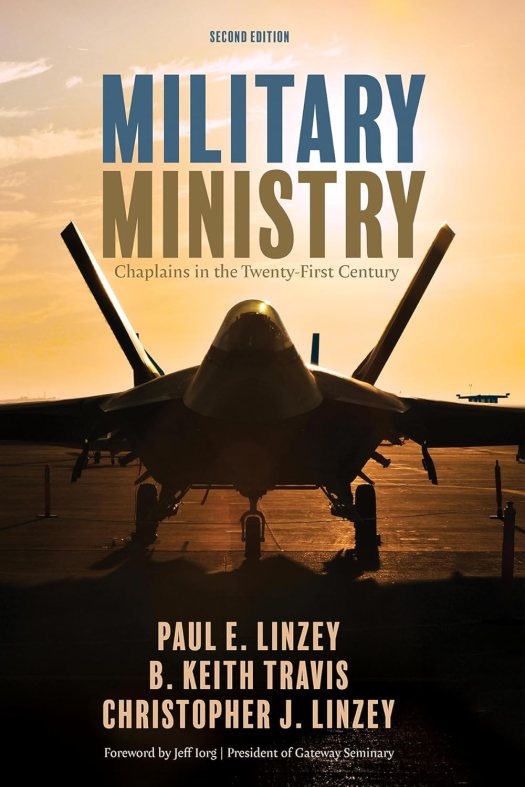
Military Ministry is a terrific book for finding out what being a chaplain in the military is all about. It presents a survey of military ministry around the world, then zeroes in on the history of chaplaincy in the United States, including the Constitutional and legal foundations. It also This up-to-date, inspirational book will prepare chaplains for what they will face in the military. It shows chaplains how to be true to their mission and values while honoring people from all faith groups and lifestyles and remaining true to the Constitution.
Because of the authors’ experience, education, and connections, the book is well-researched, true to real life, and up-to-date. It is unparalleled in scope.
 Military Chaplain Guide