
It’s hard to walk into a command as the new chaplain. You don’t know the command culture and climate. You don’t know the people. Maybe they REALLY like the chaplain before you and you’ve got an uphill climb to get them to like you. Maybe they really DISLIKED your predecessor and you’ve got your work cut out for you to restore their faith in the chaplain corps. There are multiple reasons why the chaplain must be intentional in building trust in their command, so here are 6 ways (and a bonus reminder) that chaplains moving into a new space can work on building rapport and trust with their Service Members. Ready? Let’s kick it.
- First and foremost – DON’T BE WEIRD! Yeah, yeah, sounds kind of funny we have to say this, but here we are. It’s what one of my instructors said to me over a decade ago. Don’t be a weird person. This is not about hiding your personality. It’s possible for all personality types to build trust in a command. This is about doing things that repel people when, as a chaplain, we need to be intentional to draw people in. Be approachable. In a similar vein, make sure you practice good personal hygiene. Poor hygiene habits can repel people, and the Ministry Team needs to be a place the attracts rather than repels Service Members. It may be necessary to ask a blunt (but trusted and honest) source to help evaluate you. If your troops see you as weird, they won’t trust you or seek you out. One of the best compliments I (Chris) have received is, “Chaps, you’re one of the normalest chaplains I’ve met.” It really meant a lot to me. Don’t be weird.
- Be present. In the Navy, we call this “deckplating.” That is to say, solid leadership doesn’t stay locked in their office, they are out on the deckplates with the Sailors (sure, this is a Navy analogy, but the principle applies and you’re smart enough to get it). If your troops never see you, how can they ever build trust with you? The infantry does a LOT of hiking. During a battalion hikes, Marines pause every few miles to put their packs down, drink water, and rest before moving on. I made a habit of walking up and down the lines to check on Marines during these rest periods. One time I walked from the very back of the formation to the very front where the Battalion Commander and Sergeant Major were. The Commanding Officer looked at me walking up and said, “Chaps, you’re everywhere!” The reality is that I was NOT everywhere, but I was out enough so that Marines understood that I was willing to go where they went, when they went there.
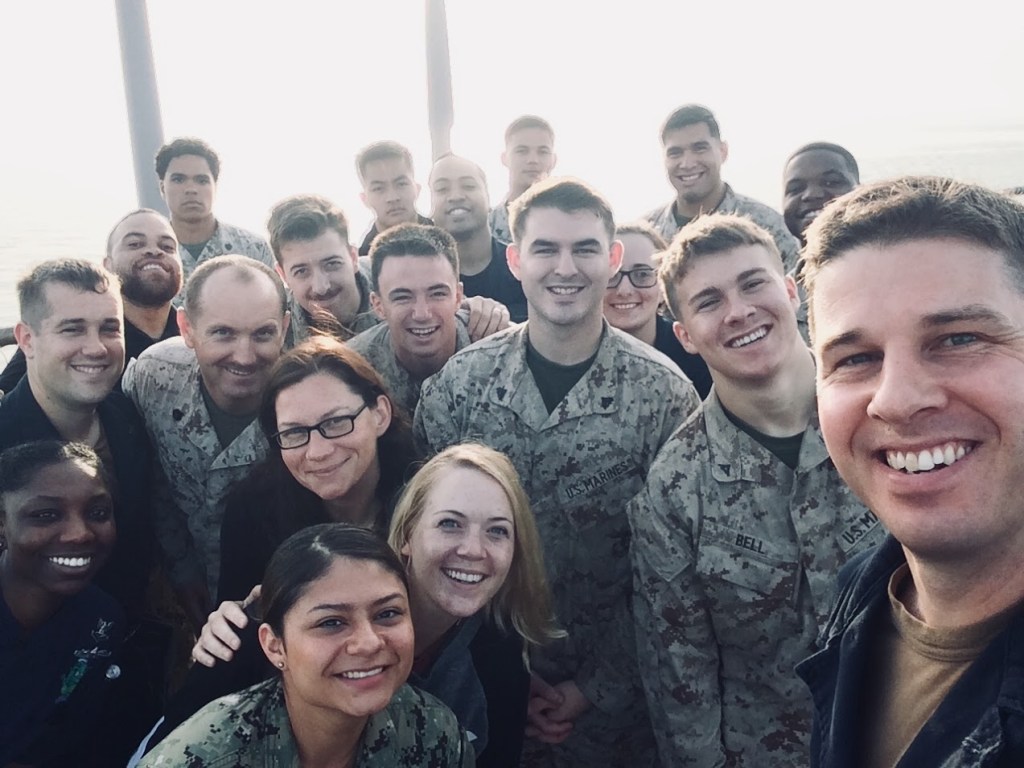
- Be real. You’re a human being. You don’t live in an ivory tower. You don’t have to pretend like you’re different from everyone else. Shoot, most Service Members already FEEL like chaplains are different. Just be real. Be human. Please understand that I’m not asking you to disclose things inappropriately or to blur the lines between pastoral caregiver and the one receiving care, but it’s okay to be real – to be YOU.
- Speak the language of your command. Every command has it’s own vocabulary. Different communities have their own lexicon. The different branches of service have their own lingo. It’s important to KNOW the language of your people and to be able to use it appropriately. When I was an Army chaplain, we called Chief Warrant Officers “Chief.” I had quite a few chiefs in my last Army battalion (159th Military Police Battalion, Criminal Investigation Division). Then I transferred to the Navy. In the Navy, the title “Chief” is a very specific title given to Chief Petty Officers – the Navy E7. To fit in to a new Service, I had to learn new language. This is true of every command the chaplain goes to. There will be language specific to that command and community. Learn it and learn to use it. Speaking the language helps foster a sense of “Chaps belongs here with us.”
- Care for all. This feels like it should be a no-brainer, but every once in a while you’ll find a chaplain that focuses the bulk of their attention and efforts on the Service Members who are like the chaplain. In a pluralistic environment like the military, it is critical that the chaplain be intentional to provide care for all – even those who may disagree with us. When you develop a reputation as a caregiver regardless of the background of the troops, you’ll have an easier time building trust. You move from, “Chaps is here for THEM” into “Chaps is here for US.” Some of the best relationships I’ve developed in the military are people who have never and perhaps never will ever set foot in my chapel or field service. They don’t believe what I believe. That’s okay. They still reach out to chat, ask advice, and seek connection. I think that’s REALLY cool.

- Be present. Chris, you already used this one. Did I?!? Well, look at that. Maybe it’s just that important. As a chaplain, you will absolutely need to handle emails, administrative work, sermon preparation, and LOTS more. Still, you cannot be chained to your desk. One of the saddest comments I’ve ever heard was, “I never even knew who our chaplain was.” It’s heartbreaking. Find ways to be where the people are. When I was ship’s chaplain on USS FORT MCHENRY, I made a habit of serving in the chow line every Friday night. It gave me face time with every Sailor and Marine on board, even those who would never cross the threshold of my office. You can’t build trust if you’re not known and where your troops are.
Bonus comment – Okay, okay, not actually a 7th point, but something to remember. Building trust TAKES TIME! When I was in the infantry, it took months and a couple of field ops before it FELT like I was their chaplain. That’s totally normal.
TRUST. TAKES. TIME.
Be intentional. Put in the work. Be faithful in the job. Don’t be weird. And you’ll build trust in the command that will last LONG after you leave the command. One of my favorite things is to have Sailors and Marines from years past reach out to me now. Sometimes they are asking for assistance. Sometimes they just want to connect.
And that’s totally awesome.
– – –
What would you add to the list? What has worked for you in building trust on the job? Drop a comment and let us know! And if there’s anything else you’d like to know about military chaplaincy, just ask. We really love talking about this stuff. 🙂

To read the latest book from Linzey, Travis, and Linzey about military chaplaincy, check it out here – Military Ministry: Chaplains in the Twenty-First Century.
 Military Chaplain Guide